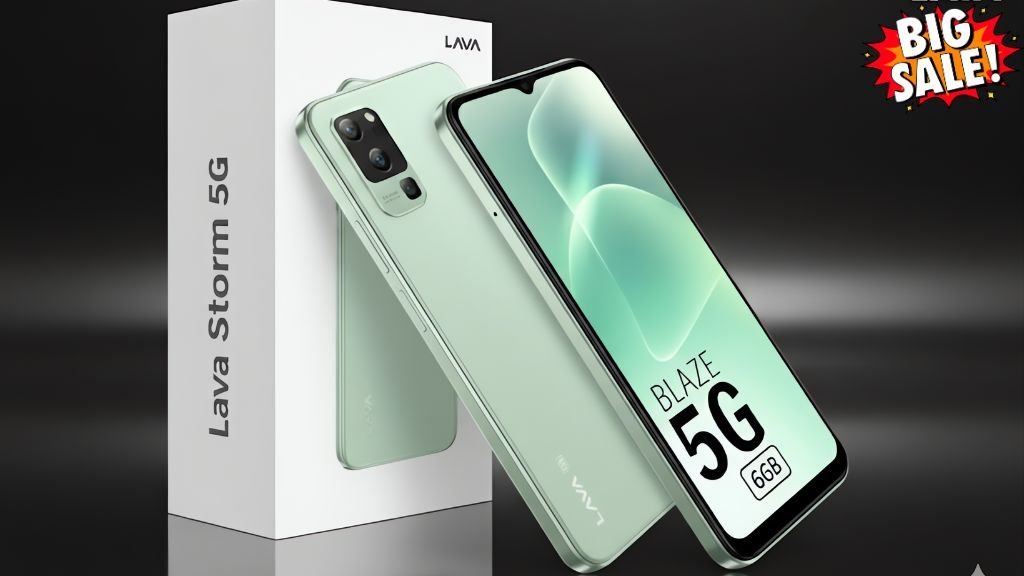
Lava Storm 5G Launched : The Lava Storm 5G is one of those rare budget phones that tries to cover the basics with sincerity and then throws in a few pleasant surprises. This isn’t trying to be the flashiest device in the room. Instead, its pitch is straightforward: a large and smooth 120Hz display for bingeing and gaming, a reliable 5G chipset that doesn’t hiccup through everyday tasks, useful cameras with an ultra-wide lens, a genuinely all-day 5000mAh battery, and a clean software approach that doesn’t swamp you with preloaded clutter. Put that together at a price often floating near the ten-to-twelve-thousand mark in India and you begin to see why it keeps popping up in recommendation lists for first-time 5G buyers and students. The core hardware—Dimensity 6080 paired with 8GB RAM and 128GB storage—gives the phone the legs to run well beyond the honeymoon period, while the 120Hz screen makes interactions feel lively. For anyone moving up from an older 4G handset or a laggy budget phone, this is a sensible, future-ready step that doesn’t drain the wallet. The official spec sheet confirms the central promise: 120Hz FHD+ panel, Dimensity 6080, 8GB/128GB, 50MP + 8MP rear cameras and 16MP front camera, all wrapped in a glass-back design.
| Key Specs & Highlights | Details |
|---|---|
| Display | 6.78-inch FHD+ LCD, 120Hz refresh rate |
| Processor | MediaTek Dimensity 6080, octa-core |
| RAM & Storage | 8GB RAM, 128GB storage, RAM expansion supported |
| Rear Cameras | 50MP main + 8MP ultra-wide, EIS video support |
| Selfie Camera | 16MP |
| Battery & Charging | 5000mAh with fast charging |
| Software | Clean Android experience |
| Design | Glass back, slim profile, distinctive Lava styling |
| Price Band (street) | Commonly seen around ₹10,500–₹12,500 depending on offers and stock |
Design And In-Hand Feel: Minimal, Glassy And Familiar
Pick up the Lava Storm 5G and the first thing you notice is the back. It’s glass, it looks tidy, and it gives the phone a more premium vibe than textured plastic shells at this price. The camera island is compact and sits cleanly, while the overall weight distribution feels balanced enough for one-hand use in crowded metro compartments. The colors—especially the darker, moodier shades—keep fingerprints reasonably disguised after a long day. There’s no overdesigned flourish fighting for your attention; the Storm opts for a simple, grown-up look that blends into office desks and college benches alike. That clean approach continues on the sides with clicky buttons and a reassuring power key. It’s not an ultra-slim featherweight, but it’s also not a brick. The design language aims for sensible everyday comfort rather than a showpiece silhouette that sacrifices grip or durability.
Display And Everyday Experience: Why 120Hz Still Matters
If you’ve never used a 120Hz screen, the upgrade can feel subtle at first and then strangely addictive. Scrolling your feed, browsing long pages, or swiping through photos just feels easier on the eyes. The Storm’s 6.78-inch FHD+ LCD gets bright enough indoors and holds steady in the shade outdoors. Colors lean natural, not cartoonish, which is good news for long reading sessions or IPL highlights you’re streaming on low brightness late at night. Widevine L1 support means OTT apps can deliver high-resolution streams instead of soft, grainy video—handy when you’re catching up on a series on your commute. The brand’s own materials highlight the 120Hz FHD+ spec and the large 17.22cm panel, which gives you roomy screen real estate for multitasking and casual gaming.
Performance And 5G Readiness: Built On A Trusted Budget Workhorse
Under the hood sits MediaTek’s Dimensity 6080, a proven budget 5G chip that focuses on smooth daily performance more than headline-grabbing benchmark fireworks. Pair it with 8GB RAM and UFS-class storage, and basic tasks simply get out of your way. App switching is brisk, Instagram reels open without stutter, and messaging, maps and payments happen with that crucial absence of friction you want from a daily driver. Reviews and listings consistently identify the Dimensity 6080 as the engine here, along with the 8GB/128GB memory combo—an approachable setup that keeps pace with a couple of years of Android updates.
On the network side, 5G is less of a marketing term and more of a practical perk now that coverage in metro and tier-2 cities has improved. The Storm locks onto 5G reliably where available and falls back to 4G gracefully when you step indoors or into patchy zones. Whether you’re hot-spotting a laptop in a café or downloading lecture PDFs before a bus ride, the experience feels modern and dependable.
Cameras That Keep It Honest: Useful Ultra-Wide, Natural Skin Tones
At this price, gimmicky triple and quad camera arrangements often disappoint. The Lava Storm 5G sticks to a sensible 50MP main camera plus an 8MP ultra-wide, and then it does the basic tuning right. Daylight shots are confident, colors aren’t overcooked, and sky blues stay realistic. The ultra-wide is the underrated hero for group photos and architecture; even if it isn’t flagship-grade, it beats digital cropping in tight spaces. The 16MP selfie camera avoids plastic skin smoothing when you dial sharpening down a tad, and dynamic range holds in backlit cafés better than expected. For video, EIS is available, and while you won’t get flagship gimbal stability, walking shots for vlogs or campus reels are more watchable than handheld wobble. Spec sheets and product pages consistently list 50MP + 8MP on the rear and 16MP up front, with EIS and high-res modes present in the camera app.
Battery Life And Charging: The Comfort Of A Full Day
A 5000mAh cell is table stakes in India now, but implementation decides whether you finish the day with 40 percent left or nervously hunting for a cable at 7 pm. The Storm’s combination of a power-efficient Dimensity 6080 and respectable optimization means a typical day—WhatsApp, calls, social, YouTube, maps—ends with enough in the tank for late-night scrolling. If you’re gaming for long stretches, the percentage will drop faster, but the phone recovers quickly on the charger. Real-world impressions of the Storm’s stamina line up with the spec sheet promise of a large battery and fast charging support, and that’s exactly what most buyers in this band are after.
Software: Clean, Calm, And Largely Clutter-Free
The Storm’s software experience leans toward “install what you need, leave the rest out.” For students and professionals alike, that means less time disabling bloat and more time getting on with life. The UI is straightforward, icons and menus are familiar, and navigation gestures work as you’d expect. Paired with the 120Hz panel, the interface feels more expensive than the sticker price suggests. The brand’s budget devices have been emphasising a cleaner Android experience in this series, and it shows. If you’re migrating from a heavily skinned phone with dozens of preloads, this will feel refreshingly light.
Gaming And Thermals: Meant For Casual, Not Esports
Fire up BGMI, Asphalt or EA FC and the Storm holds a steady, comfortable pace at moderate settings. You’re not buying an esports rig here, but network play and long arcade sessions are perfectly doable. After half an hour, the back gets warm rather than hot, and frame rates remain consistent if you keep expectations realistic. The 120Hz panel helps menus and camera pans feel slick, while the chip keeps power draw practical. For late-night sessions under the ceiling fan, that’s the right mix.
Audio, Calls And Connectivity: The Everyday Essentials
Calls are clear, and the mic doesn’t pick up excessive wind on bike commutes if you angle the phone right. Wi-Fi and Bluetooth remain stable while juggling earbuds and a laptop, and network handoffs between 4G and 5G don’t drop your music stream. The single speaker gets loud enough for a bedroom binge, though as always headphones are a better choice for movies or long study playlists. NFC isn’t the norm in this price band, and the Storm focuses on the staples that matter daily.
Storage And Expansion: 128GB Is The Sensible Floor
With 128GB onboard, the Storm gives you room to install your must-have apps, keep offline playlists, and store a lot of camera clips before you have to audit your gallery. If you’re an aggressive downloader or shoot many videos, regular housekeeping will still be wise. The point is you’re not boxed into 64GB, and that alone boosts quality of life. Listings everywhere pin this 8/128 combo as the mainstream configuration for the Storm.
Price And Value: Why The Street Price Makes It Click
Official MRPs are one thing; the numbers you see during sales and bank-card offers are another. The Storm 5G’s street pricing regularly pops up around the ₹10.5k–₹12.5k zone depending on the day and platform, occasionally dipping further during festival events. Retail pages and price trackers reflect this “affordable 5G” positioning, which is a big part of its appeal. When you add 120Hz FHD+, Dimensity 6080, 8/128 memory, a glass back, ultra-wide camera and a 5000mAh battery at that price, the math becomes easy for anyone upgrading from a three-year-old 4G phone.
Who Should Buy The Lava Storm 5G
If you want your first 5G device without stepping into ₹15k+ territory, the Storm is a strong candidate. It’s ideal for students who stream a lot and play casually, parents who need a dependable WhatsApp-calls-YouTube phone, or professionals who live in productivity apps and want that 120Hz smoothness. Creators who do light vlogging can lean on the EIS and ultra-wide for variety, while heavy shooters and gamers may want to spend more for faster charging systems or higher-end chipsets. The strength of the Storm is simple: it covers all the basics well and keeps your day friction-free.
Long-Term Outlook: The Boring Things That Matter
Phones age not just because of hardware, but because of software drag and battery fatigue. The Storm’s clean UI helps it stay lively as your app library grows. The battery’s capacity and charge logic are tuned for the long haul; treat it kindly and it’ll return the favor. Accessory availability—cases, tempered glass—remains strong online, so you’re not hunting for oddball sizes months later. Service-wise, Lava’s footprint has improved, and for mainstream parts like displays and batteries, turnaround tends to be reasonable in metro areas.
Verdict: A Calm, Competent Budget 5G That Doesn’t Try Too Hard
The Lava Storm 5G isn’t pretending to be something it’s not. It’s a practical, thoughtfully specced phone for people who want a smooth screen, steady performance, usable cameras and a big battery—without paying flagship money. When you stack it against similarly priced rivals, the 120Hz FHD+ panel, the Dimensity 6080, the 8/128 memory combo and the glass-back finish keep nudging it up the shortlist. If your budget is around ₹11k–₹12k and you value clean software over flashy add-ons, the Storm 5G is easy to recommend. The official specs page and multiple Indian listings back up those promises, which is what you want before you hit “Buy Now.”
FAQs: Lava Storm 5G
What chipset and memory does the Lava Storm 5G use
It runs the MediaTek Dimensity 6080 with 8GB RAM and 128GB storage, with RAM expansion supported on the device. This combo is noted across the brand page and retail listings.
Does the Lava Storm 5G have a 120Hz display
Yes, it features a 6.78-inch FHD+ LCD with a 120Hz refresh rate, which helps with smoother scrolling and gaming menus. This is confirmed on the official Storm 5G page.
How is the camera quality for the price
You get a 50MP main camera and an 8MP ultra-wide, plus a 16MP selfie camera. For daylight and casual social content, results are solid, and EIS helps stabilise handheld video. The configuration is documented on brand and retailer pages. lavamobiles.com+1
What kind of battery life should I expect
With a 5000mAh cell and an efficient chip, a full day of mixed use is realistic, and charging speeds are competitive for the segment. Product listings reflect the 5000mAh capacity and fast-charge support.
What is the price of the Lava Storm 5G in India
Street prices often range near ₹10,500–₹12,500 depending on offers and stock. Trackers and storefronts show frequent variations around that band.
Is the software clean or loaded with bloat
The Storm 5G emphasizes a cleaner Android experience compared with many budget phones, which makes setup and long-term use simpler. This “clean Android” positioning is echoed in product write-ups for the series.