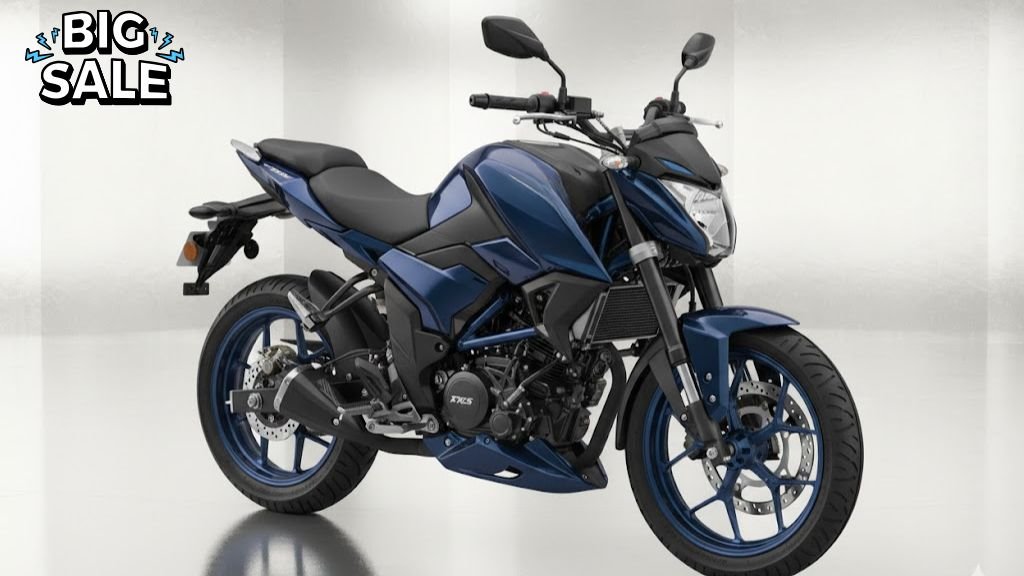
TVS Apache RTR 160 New Model : range typically starts a shade over the one-lakh mark ex-showroom, with the 2V positioned as the value pick in the lineup and the 4V adding performance kit. Price can swing based on city taxes and recent updates, so treat any number as indicative. TVS’s official site has shown the 2V ex-showroom around the ₹1.21 lakh mark for Delhi at one point, with on-road over ₹1.45 lakh depending on accessories and charges. In mid-2025, media reported a refreshed RTR 160 2V with a dual-channel ABS option around ₹1.34 lakh ex-showroom, which is a meaningful safety upgrade over the single-channel era. Also, select reports highlighted industry-wide price adjustments after tax changes, with the Apache series seeing reductions in late September 2025—always worth checking current dealership quotes before you buy.
TVS Apache RTR 160 The Everyday Street Racer India Still Loves
| Key Highlights | Details |
|---|---|
| Engine & Power | 159.7cc, air-cooled, fuel-injected single; up to 16.04 PS on RTR 160 2V; 17.55 PS on 4V sibling |
| Braking & Safety | Disc options with single/dual-channel ABS on latest update |
| Claimed/Owner Mileage | ARAI up to ~61 kmpl; real-world ~45–50 kmpl depending on riding |
| Ex-Showroom Price Range (Indicative) | Starts around ₹1.08–1.21 lakh for 2V trims; recent 2025 update listed around ₹1.34 lakh top variant; prices vary by city and ongoing revisions |
| Standout Bits | Sharp racing DNA, crisp throttle response, light, city-friendly ergonomics, proven reliability |
The TVS Apache RTR 160 is one of those Indian motorcycles that refuses to fade into the background. It arrived with a simple promise—make everyday rides feel sporty without turning impractical—and over the years TVS has polished that promise into a well-rounded street machine. If you’re eyeing a do-it-all 160, the Apache RTR 160 brings an entertaining motor, city-wise agility, and a dash of race-bred character that keeps commutes interesting and weekend spins enjoyable.
TVS Apache RTR 160 – What makes it click today
Walk up to the Apache RTR 160 and you notice the stance first. It sits compact, purposeful, and a little coiled—like it’s ready to dart between gaps the moment the light turns green. That has always been the Apache attitude. TVS leans into its racing theme through the tank extensions, tidy tail, and well-judged graphics. The 2-valve RTR 160 keeps the silhouette familiar and approachable, while the 4V sibling turns up the aggression. But this story is about the 2V: the dependable heart of the Apache family that made lakhs of riders fall in love with sporty commuting.
Under the tank is a 159.7cc fuel-injected single that makes up to 16.04 PS on the 2V, delivered with a clean, eager throttle response. For riders coming from 125–150cc commuters, the difference is immediate: more pull in the mid-range, a smoother top-end, and a five-speed gearbox that likes being worked. TVS claims 0–60 km/h in around 5.3 seconds for the platform; in the real world that translates to quick traffic sprints and confident highway merges when you need them. The official spec sheet for the 2V lists 159.7cc displacement and 16.04 PS peak power, while the 4V variant steps up to 17.55 PS with a higher-revving character and extra headroom for enthusiastic riders.
Engine, performance and refinement
At the heart of the RTR 160 is a simple formula: keep the motor tractable at low revs and zippy in the city, but don’t punish the rider at 70–90 km/h cruising speeds. In typical Apache fashion, the mapping feels crisp off-idle and meaty in the mid-range. Overtakes in third and fourth come easy, and the fifth gear lets you settle into a relaxed rhythm. The 2V is air-cooled and stress-free to maintain; the 4V adds oil-cooling, more valves, and a top-end punch that keen riders appreciate. Claimed ARAI efficiency for the RTR 160 is on the optimistic side—as always—but owners commonly report mid-40s to about 50 kmpl if you ride clean and keep revs sensible.
Ride, handling and braking confidence
The Apache’s chassis has always been tuned for a touch of sport. You feel it the first time you lean into a flyover or thread across a broken back road. Steering is light, the front talks to you, and the bike stays planted when you pick up the pace. That confidence expands with better tyres and, crucially, with ABS support. The big update making headlines this year is the adoption of dual-channel ABS on the RTR 160 2V in select variants, bringing braking control to both wheels and levelling up safety on wet monsoon commutes or dusty country highways. The 4V trim, meanwhile, continues to mix its grippy dynamics with higher output and premium touches like advanced instrumentation on newer iterations.
Design, features and everyday usability
TVS doesn’t shout; it sketches. The RTR 160’s bodywork is sharp without being loud. The tank extensions give the bike shoulders, the headlamp sits low with a focused stare, and the tail keeps things tight. You sit neutral-sporty—slightly canted forward, knees neatly tucked. The handlebar is wide enough for leverage in traffic but not so wide you’re clipping mirrors. Seat height is friendly for a range of riders, and the pillion perch is usable for daily two-up runs.
On the features side, the essentials are sorted. Fuel injection gives predictable starts, even on cold mornings. The instrument cluster packs in the usual readouts and, depending on the trim and year, you’ll see smart connectivity options on higher variants across the Apache family. The RTR 160 4V showcases the tech edge more flamboyantly in some model years, with TFT options and traction control on premium variants; it’s worth test-sitting both if you enjoy rider-tech.
Fuel efficiency and living with it
If your Monday to Friday involves 25–40 km daily in mixed traffic, the RTR 160 sits in the sweet spot: quick enough to feel special, efficient enough to be sensible. The ARAI claim for the 2V has gone as high as 61 kmpl in catalogue figures, while owner averages hover in the mid-40s in typical Indian conditions with start-stop traffic and occasional hard pulls. The 12-litre tank means realistic 450–550 km between fills if you ride smart, which is excellent for a bike that can also play on weekend runs. Routine service costs are friendly, spares are widely available, and TVS’s network coverage keeps downtime minimal—one reason the Apache nameplate has remained a top pick in this segment for years.
Comfort, ergonomics and pillion talk
City comfort is a balancing act: you need support under braking, tolerance for speed breakers, and a saddle that won’t nag. The RTR 160 threads that needle well. The seat foam density lands in the “firm-supportive” zone, so short hops feel energetic and longer rides don’t cave in the cushion. The suspension tune is sport-leaning but not punishing, and the bike sails over typical potholes as long as you don’t hammer into them. Pillion riders report a secure hold and acceptable knee bend, though if you’re planning regular two-up highways, consider a touring saddle upgrade and a small backrest for ease.
Colours, trims and the 4V temptation
Apache buyers often begin with the RTR 160 2V for its price-to-performance balance and then glance across at the 4V because, well, temptation. The 4V brings a stronger top-end, oil-cooling, and, in certain model years, a wider palette of colours and premium kit. If you’re the kind who will graduate to occasional spirited rides on open roads, try a back-to-back test ride of both. The 2V keeps the wallet happy and the city grin alive; the 4V is where your inner enthusiast gets that extra sugar rush. Colour options across the range have been generous, with TVS regularly rolling out new liveries to keep the lineup fresh.
Apache vs rivals – the real-world view
In the 160cc playground, names like Bajaj Pulsar NS160/N160, Hero Xtreme 160R, Honda Unicorn, and Yamaha FZ make strong cases. The Apache RTR 160 counters with sharper handling feel, a peppy motor, and a sportier ergonomic package. The Bajaj NS160 can match or edge it on outright figures and hardware in some variants; the Unicorn counters with comfort and calm; the FZ brings finesse and easy manners. Still, many riders pick the Apache for its sense of occasion—every start-up, every short burst through traffic, every late-evening ride becomes a bit of a mood. Comparison sheets will show the Apache 4V’s 17.55 PS nudging past some rivals, while the 2V remains adequate for city fun and light touring.
Should you buy the TVS Apache RTR 160 in 2025?
If you want a motorcycle that pulls weekday duty without losing its weekend smile, the answer is a strong yes. The latest safety upgrades like dual-channel ABS on the 2V in select variants sweeten the deal, especially if your commute involves monsoon-slick flyovers or patchy rural tarmac. Prices have moved around this year—some trims climbed with new equipment while later reports suggested reductions after tax changes—so check your city’s current ex-showroom tags and any seasonal offers. The core experience, however, stays the same: a nimble, energetic street bike that has matured without losing its spark.
Specifications snapshot for context
To anchor the discussion with numbers, the RTR 160 2V runs a 159.7cc, air-cooled, fuel-injected single making up to 16.04 PS around 8,750 rpm with a five-speed gearbox and roughly 12-litre tank. TVS has advertised a brisk 0–60 km/h time of about 5.3 seconds for the platform and kept the kerb weight friendly for city duty. The RTR 160 4V’s spec sheet is spicier: the same displacement but a four-valve head, oil-cooling, and 17.55 PS at around 9,250 rpm, along with a claimed city mileage in the high-40s.
Buying tips and ownership feel
When you test ride, try two loops: one tight urban loop with nasty speed breakers and stop-go signals, and one brief stretch where you can hold 70–80 km/h. On the urban loop, feel for low-rpm tractability—it should pull cleanly from 25–30 km/h in higher gears without shudder. On the fast stretch, check for handlebar buzz and mirror clarity around 6–7,000 rpm; a well-set Apache will stay composed. Do a hard brake test in a safe, empty lane to experience the ABS intervention. If your dealer has both 2V and 4V demo bikes, ride them back-to-back to calibrate your preference for power delivery and feature set.
Over months of living with an RTR 160, what tends to stand out is predictability. The clutch feel is consistent, the throttle mapping remains friendly in traffic, and service intervals are straightforward. Fit a decent set of tyres when your first set wears out—the chassis rewards grip. Keep chain slack within spec, and the bike will return the favour with smooth shifts and better throttle response.
Final word
The TVS Apache RTR 160 has earned its stripes the hard way: by showing up every day and making every day feel a little special. In a world that keeps adding gadgets and weight, the 2V’s charm is that it stays light, alert, and affordable, while the 4V keeps the enthusiast window open if you want more. With the latest safety updates and a price band that still undercuts many rivals trim-for-trim, the Apache remains a terrific gateway into sporty motorcycling—without losing the practical head you need for India’s roads.
FAQs: TVS Apache RTR 160
Is the TVS Apache RTR 160 good for daily commuting?
Yes. Its light steering, tractable engine and friendly ergonomics make it easy in heavy traffic. The 2V is especially relaxed to live with, while the 4V adds performance if you crave more headroom for weekend rides. Claimed efficiency is strong, and real-world figures in the mid-40s kmpl are common with sensible riding.
What is the power and mileage of the TVS Apache RTR 160?
The 2V delivers up to 16.04 PS from a 159.7cc FI engine, while the 4V pushes up to 17.55 PS. ARAI mileage figures can touch ~61 kmpl for the 2V, though owners generally report around 45–50 kmpl depending on conditions.
Has the RTR 160 received safety upgrades recently?
Yes. In 2025, reports highlighted a dual-channel ABS addition on the 2V in select variants, a big safety step over earlier single-channel setups. Always confirm the specific brake configuration on the variant you’re booking.
What is the current ex-showroom price of the Apache RTR 160?
Indicatively, the 2V’s entry variants have been listed a little above ₹1.08 lakh in some cities and around ₹1.21 lakh ex-showroom Delhi at one point, with a 2025 update reported near ₹1.34 lakh for a higher variant. Prices change with city, variant and policy revisions, so check your local dealer’s latest quotation.
How does the Apache RTR 160 compare to rivals like the Pulsar 160?
The Apache feels nimble and engaging, the Pulsar NS/N160 counters with competitive hardware and figures; the Unicorn majors on comfort and simplicity, while Yamaha’s FZ family brings refinement. A quick back-to-back ride will tell you which flavour suits your daily route.
Which one should I pick
Pick the 2V if you prioritise value, city comfort and easy maintenance. Go 4V if you want extra power, a more enthusiastic top-end and, in some model years, richer features. Both keep the classic Apache feel; the 4V just amplifies it.